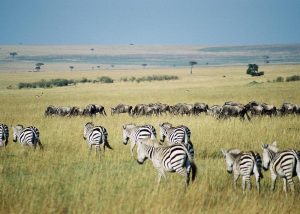
The Great Wildebeest Migration is the greatest wildlife spectacle on earth — a relentless, ancient, circular journey of 1.5 million wildebeest, half a million zebras, and 200,000 gazelles across the Serengeti-Mara ecosystem. This is not a migration you watch from a distance. It is a migration you feel. Standing at the Mara River bank as a thousand wildebeest hurl themselves into crocodile-filled water, the sound and the chaos and the desperate energy of it all — this is a moment that changes people. Blue Lilac Tours & Travel exists, in part, to put you exactly there.
1.5M
Wildebeest in the migration
3,000 km
Annual circuit distance
Aug–Sep
Peak Mara river crossings
200+
Crocodiles in the Mara River
Experience the Migration with Blue Lilac
Our guides know the Mara River crossings intimately — let us position you at the right place at the right time.
The Migration Calendar: A Year in the Life of the Serengeti-Mara
The Great Migration is not a seasonal event that switches on and off. It is a permanent, continuous loop — wildebeest following rainfall and fresh grass across a 3,000 km circuit, driven by ancient instinct. Understanding where the herds are at any given time is the key to seeing them at their most spectacular.
🐣 January – March — Calving Season — Southern Serengeti
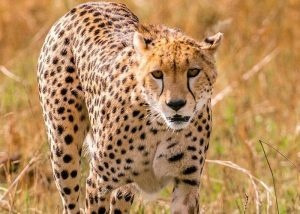
500,000 calves are born on the southern Serengeti plains in a concentrated burst of new life. Lions, cheetahs, and hyenas are extraordinarily active. This is one of the most dramatic predator-viewing periods of the year — and it happens in Tanzania’s Ndutu region. Our 5 Days Tanzania Safari is ideal for this season.
🚶 April – June — Moving North Through the Serengeti
The herds move north through the Serengeti’s central and western corridors, following the rains. The Grumeti River crossings in May and June offer a preview of the Mara River drama to come — smaller in scale but equally intense. Tanzania’s western Serengeti is the place to be.
🌊 July – October — The Mara River Crossings — Kenya
The migration’s most dramatic chapter. Herds build on the southern bank of the Mara River in their hundreds of thousands. Then — triggered by a single bold animal — they plunge in. The Mara River’s Nile crocodiles (some over 5 metres long) have been waiting. This is the scene that fills every Kenya safari documentary. Our 3 Days Masai Mara Safari and 7 Days Kenya Safari run through this season.
↩️ November – December — Return South Through Tanzania
By November the Mara’s short rains signal a return south. The herds move back through Tanzania’s western corridor and eventually back to the southern Serengeti. The cycle begins again. If you miss the Mara in peak season, the 13 Days Kenya & Tanzania Safari gives you both the Mara and the Serengeti.
The crossing started without warning. One wildebeest jumped. Then another. Then ten thousand. The noise was like nothing I had ever heard — hooves and water and the sound of something ancient and unstoppable.
— Blue Lilac guest, Mara River, August
The Drama of the Mara River Crossing
The Mara River is the climax of the migration’s Kenya chapter — and one of nature’s most theatrical events. The river itself is relatively narrow (20–30 metres at most crossing points), but its steep red-clay banks, fast-moving brown water, and resident Nile crocodile population make it a formidable obstacle. Wildebeest are not natural swimmers, and they know it. Herds can gather at the bank for hours — sometimes days — before the collective nerve breaks and the crossing begins.
🎬 What Happens During a River Crossing
A crossing typically begins when one animal commits to the water. Within seconds, thousands follow — a stampede of instinct over fear. The chaos is extraordinary: wildebeest swimming, tumbling, climbing over each other, while crocodiles glide below the surface. Lions wait on the opposite bank. Most wildebeest make it. Many don’t. The entire crossing can last twenty minutes or three hours.
Blue Lilac’s Guide to Maximising Your Migration Experience
Stay Minimum 3 Nights in the Mara
River crossings are unpredictable. Three nights gives you six game-drive sessions — dramatically improving your odds of witnessing one. Our 3 Days Masai Mara Safari is built around this. If you can spare more time, 7 Days Kenya Safari adds Amboseli and Nakuru to the mix.
Trust Your Guide’s River Positioning
Blue Lilac’s Mara guides monitor crossing behaviour daily — tracking which herds are building, which crossing points are active, and where crocodile activity is highest. We position vehicles before the crossing begins, not after.
Go Beyond the River Crossing
The migration is about more than crossings. The open Mara plains during July–October are saturated with wildebeest, and lion prides hunt among them relentlessly. Cheetah and hyena activity is extraordinary. Even without a crossing, the Mara in August is incomparable.
Consider the Tanzania Circuit for the Full Picture
To follow the migration through both countries, our 13 Days Kenya & Tanzania Safari covers the Masai Mara and the Serengeti in a single 13-night circuit — the only way to experience both the Mara crossings and the Serengeti calving season in one journey.
Bring the Right Camera Setup
River crossings unfold fast. You want a telephoto lens (minimum 400mm equivalent) for close-up action, and fast enough shutter speed to freeze the movement. See our Kenya Safari Photography Tips for detailed guidance from Blue Lilac’s experienced guides.
Book a Migration Safari with a Guide Who Lives for This Moment
Blue Lilac Tours & Travel’s Mara guides have witnessed hundreds of river crossings — their expertise transforms a good safari into an extraordinary one.
Migration Safari Packages from Blue Lilac
Our most popular migration packages include the 3 Days Masai Mara Safari (ideal for a focused Mara experience), the 7 Days Kenya Safari (the classic Kenya circuit timed for peak season), and the grandest of all — the 13 Days Kenya & Tanzania Safari, which puts you in both the Mara and the Serengeti in a single magnificent loop. For guests specifically targeting the river crossings, we recommend travel between late July and 20 September for the highest crossing frequency.
The Migration Waits for No One. But It Waits for the Right Season.
Book your Great Migration safari with Blue Lilac Tours & Travel.
Frequently Asked Questions
When exactly do the wildebeest cross the Mara River?
The Mara River crossings typically occur between late July and mid-October, with the peak most often in August and September. However, crossing timing is unpredictable — herds may build at a crossing point for days before a single animal triggers the stampede. Blue Lilac guides monitor crossing activity daily to position guests optimally.
How many wildebeest are in the Great Migration?
The Great Wildebeest Migration involves approximately 1.5 million wildebeest, along with 500,000 zebras and 200,000 gazelles — roughly 2.2 million animals in total. It is the largest overland migration of mammals on earth.
Is the Great Migration only in the Masai Mara?
No — the Migration is a circular, year-round event covering the Serengeti in Tanzania and the Masai Mara in Kenya. The herds are in the Mara from approximately July to October; the rest of the year they are in the Serengeti. Blue Lilac can position you in either country depending on the season.
Can you guarantee a river crossing sighting?
No operator can guarantee a river crossing — wildlife is wild and unpredictable. However, Blue Lilac’s experienced guides spend extended periods at crossing points and use their deep knowledge of herd behaviour to maximise your chances significantly. Multiple-day Mara visits dramatically increase the probability.
What is the best safari for seeing the Great Migration?
Our 3 Days Masai Mara Safari and 7 Days Kenya Safari are excellent options timed for the migration season (July–October). For guests wanting both the Kenya Mara crossing and the Tanzania Serengeti migration experience, our 13 Days Kenya and Tanzania Safari offers the ultimate migration circuit.

Blue Lilac
Best Tour & Travel Option
About Us
Blue Lilac Tours & Travel is a premier travel company dedicated to crafting exceptional Kenya safari experiences and curated international tour packages. We specialize in delivering seamless, end-to-end travel solutions tailored to the unique needs of individuals, families, and corporate groups across the globe.