Kenya Safari Photography Tips: How to Capture Extraordinary Wildlife Images
Kenya is one of the greatest wildlife photography destinations on earth — and a great photograph from a Kenya safari is not reserved for professional photographers. It is reserved for people who understand a few key principles, bring the right equipment, and are in the right place at the right time with a guide who knows where the light falls. Blue Lilac Tours & Travel’s guides have spent years not just finding animals, but positioning guests for extraordinary images. These are their photography secrets — shared here so that you leave Kenya with photographs that make people stop scrolling.
Book a Blue Lilac Photo-Focused Safari
Tell us photography is your priority — we tailor game drive timing and positioning around the best light and subject access.
The Four Laws of Safari Photography
Light Is Everything — Hunt the Golden Hours
The most important photography lesson in the African bush. The hour after sunrise and the hour before sunset produce warm, directional, amber light that transforms ordinary wildlife images into extraordinary ones. The same lion looks flat and washed-out at noon; at 07:00 or 17:30, in raking golden light, it looks like a painting. Blue Lilac’s guides design game drive timing around these windows — early starts and extended afternoon drives are non-negotiable for photographers.
Speed First, Everything Else Second
Moving wildlife requires fast shutter speeds. Start with a minimum of 1/1000 second for walking animals, 1/2000 for trotting, and 1/4000 for running or flying subjects. Modern cameras handle this in Auto or Shutter Priority mode. Don’t worry about a slightly raised ISO — digital noise is far less damaging to an image than motion blur.
Get Low — Lose the Vehicle Roof
The most common mistake in safari photography is shooting from too high an angle. When possible, position your lens at the animal’s eye level. In a pop-top safari vehicle, this means crouching to window height rather than shooting over the roof. Eye-level shots create the feeling of being in the animal’s world, not looking down on it.
Patience Beats Perfection
The best safari photographs rarely happen in the first ten minutes at a sighting. They happen when you stay — when the lion stretches, when the elephant calf bumps into its mother, when the cheetah finally looks directly at you in perfect profile. Blue Lilac’s guides are experienced at reading animal behaviour and will keep you at a sighting as long as it takes.
Don’t look for the perfect shot. Be present. The perfect shot will find you.
— Blue Lilac Guide and Photography Mentor
Essential Safari Photography Equipment
📷 The Minimum Effective Kit
You don’t need to be a professional to come home with extraordinary images. At minimum: a smartphone with a good telephoto mode (iPhone 15 Pro, Samsung S24 Ultra), or a bridge camera with 400mm+ equivalent zoom. At the next level: a mirrorless camera (Sony A7 series, Nikon Z series, Canon R series) with a 100–400mm or 150–600mm telephoto lens.
- Telephoto lens: 100–400mm is the versatile standard. 150–600mm gives you more reach for shy species. Pair with a 1.4× extender for distant subjects.
- Bean bag: A simple fabric bean bag, filled with dried beans and rested on the vehicle window sill, is the most stable, most versatile safari support available. Far more practical than a monopod or tripod on a moving vehicle.
- Multiple batteries and a power bank: Safari camps have limited charging. Two full batteries per camera body is the minimum; three is better.
- Large, fast memory cards: A 256 GB UHS-II card per day of shooting is a reasonable target. CF Express is the fastest option for burst shooting.
- Lens cleaning kit: Dust is constant in the dry season. A Rocket Blower, microfibre cloth, and lens pen are essential daily tools.
- Polarising filter: Reduces glare on water surfaces and saturates colours in the blue skies above the Mara and Amboseli.
Species-Specific Photography Tips
🐘 Elephants — Amboseli
Wide aperture (f/5.6) to blur background and isolate the elephant. For the iconic Kilimanjaro shot, position yourself with Kilimanjaro behind the elephant and shoot at f/11 or smaller to keep both in focus. Our 3 Days Amboseli Safari is the definitive elephant photography safari.
🦁 Lions — Masai Mara
Get low for eye-level shots. Use f/6.3–f/8 for group shots to ensure multiple lions are in focus. In golden morning light, push ISO to 1600–3200 to maintain 1/1000s shutter speed. The 3 Days Masai Mara Safari positions you in prime lion country twice daily.
🐆 Cheetahs — Mara and Amboseli
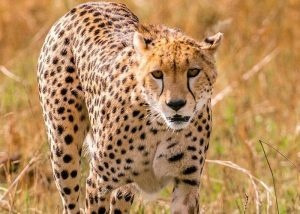
Cheetahs hunt on open plains — ideal for burst shooting at 1/4000s. Pre-focus on the cheetah before a hunt begins (guides can anticipate this). The single biggest photography regret on safari is being too slow when a cheetah starts running.
🦅 Birds — Nakuru and Naivasha
Flamingos at Lake Nakuru reward wide-angle shots showing the scale of the flocks. African fish eagles at Lake Naivasha are best photographed during a fish catch (ask your guide to position the boat). See our Lake Nakuru Day Trip and 8 Days Kenya Safari for the best bird photography parks.
Prioritise Photography on Your Blue Lilac Safari
Tell us you want to prioritise photography — we book you into vehicle positions with the best light access and plan drives around golden hour.
Post-Processing: Making Your Safari Images Sing
- Shoot RAW if your camera supports it: RAW files give you far more latitude in post-processing to recover highlights (bright African sky) and lift shadows (shaded animal faces).
- Lightroom Mobile is free and powerful: Basic adjustments — exposure, contrast, highlights, shadows, clarity, and white balance — transform mediocre safari images into compelling ones.
- Don’t over-sharpen: The biggest over-edit in wildlife photography. A touch of clarity and texture is usually enough.
- Crop for composition: Don’t be afraid to crop significantly. A tight portrait of a lion’s face, cropped from a wider frame, is almost always more powerful than the full shot.
Plan Your Photography Safari
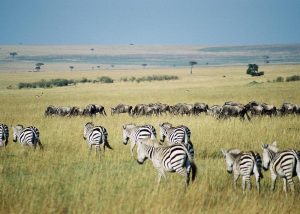
The parks that deliver the most consistent photography are the Masai Mara (see our 3 Days Masai Mara Safari), Amboseli (see our 3 Days Amboseli Safari for Kilimanjaro and elephants), and Lake Nakuru (see our Lake Nakuru Day Trip for flamingos and rhinos). The 7 Days Kenya Safari covers all three in a single photography-focused circuit. Our Best Time to Visit Kenya for a Safari guide will help you choose the ideal season for your target species.
Every Blue Lilac Safari Is a Photography Safari
Our guides are trained to maximise image opportunities. Contact us to start planning.
Frequently Asked Questions
What camera settings should I use for wildlife photography on safari?
Use Aperture Priority (Av/A mode) set to f/5.6–f/8 for sharp subjects with background separation. Set Auto ISO with a maximum of 6400. Use Continuous AF tracking mode and burst shooting (8+ fps). Minimum shutter speed 1/1000s for moving animals, 1/2000s for running subjects. Exposure compensation +0.3 to +0.7 for backlit African light.
Do I need a professional camera for a Kenya safari?
Not at all. Modern smartphones with telephoto capabilities produce excellent safari images, and compact cameras with 400mm+ zoom are very capable. That said, if you have a DSLR or mirrorless camera, a 100–400mm telephoto lens will transform your wildlife images.
What is the best light for safari photography?
The golden hours — the first hour after sunrise and the last hour before sunset — produce the warm, directional light that makes wildlife images spectacular. Plan your game drive positioning around these windows. Blue Lilac’s guides time game drive routes to maximise golden light sightings.
How do I photograph the wildebeest river crossing?
River crossings require fast shutter speeds (minimum 1/2000s), burst shooting mode, and pre-focusing on the entry point where the first animals are about to jump. Position yourself with the light behind you if possible. The chaos of a full crossing rewards burst shooting — take hundreds of frames and select later.
Can I use a drone for wildlife photography in Kenya?
No — drones are prohibited in all Kenyan national parks, national reserves, and most private conservancies without a specialist permit that is very difficult to obtain. Leave the drone at home and use your telephoto lens instead.

Blue Lilac
Best Tour & Travel Option
About Us
Blue Lilac Tours & Travel is a premier travel company dedicated to crafting exceptional Kenya safari experiences and curated international tour packages. We specialize in delivering seamless, end-to-end travel solutions tailored to the unique needs of individuals, families, and corporate groups across the globe.