Samburu National Reserve: A Deep-Dive into Kenya’s Northern Wildlife
Samburu National Reserve is where the Kenya safari story departs from everything familiar and becomes something genuinely, excitingly strange. This semi-arid wilderness in Kenya’s far north — 350 km from Nairobi, an ecosystem away from the Masai Mara’s familiar grassland rhythms — is home to five species of wildlife that exist nowhere else in the country. Reticulated giraffes with the boldest coat pattern in the giraffe family. Grevy’s zebras with the narrowest stripes and the largest ears in the equid world. The gerenuk, standing upright on its hind legs to reach acacia foliage no other antelope can touch. The Ewaso Nyiro River — brown, life-giving, lined with fig trees full of leopards — running through a landscape that feels older and rawer than the world to the south. Blue Lilac Tours & Travel brings guests to Samburu because it delivers a Kenya that most visitors never experience and almost none ever forget.
165 km²
Reserve area
5
Species found only in the north
350 km
From Nairobi
380+
Bird species recorded
Discover Samburu with Blue Lilac
Our 3 Days Samburu Safari and 9 Days Kenya Safari are the ideal ways to experience Kenya's extraordinary north.
The Samburu Special Five: A Field Guide to Kenya's Northern Exclusives
Reticulated Giraffe — The World's Most Striking Giraffe
The reticulated giraffe is the most visually arresting of the nine giraffe subspecies: its coat is defined by large, clearly delineated chestnut-brown polygons separated by bright white lines that give it a stained-glass quality. The world’s largest population lives in Samburu, where herds of twenty or more are commonly seen silhouetted against the acacia canopy at dawn. Getting close to a reticulated giraffe — watching it move with that extraordinary slow-motion grace across the semi-arid plains — is one of Samburu’s defining visual experiences.
Grevy's Zebra — Africa's Most Endangered Wild Horse
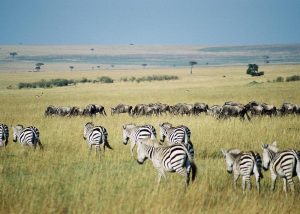
The Grevy’s zebra is the largest and most endangered wild equid on earth, listed as Endangered on the IUCN Red List with fewer than 3,000 individuals remaining. It differs strikingly from the plains zebra: narrower, more closely-spaced stripes, enormous rounded ears, and a white belly unbroken by the stripe pattern. Samburu and the surrounding Laikipia plateau hold the majority of Kenya’s Grevy’s population. Seeing them alongside the more familiar plains zebra (also present) makes the distinction immediately clear and fascinating.
Beisa Oryx — The Desert Antelope
The Beisa oryx is a large, spectacularly horned antelope perfectly adapted to arid conditions: it can raise its body temperature to avoid sweating in the heat, and its straight, metre-long horns have earned it the nickname ‘the painted antelope.’ Oryx are commonly seen in small groups on Samburu’s open plains, often alongside Grevy’s zebras and reticulated giraffes in compositions that feel like something from a gallery of rare species.
Gerenuk — The Giraffe-Gazelle
The gerenuk is one of Africa’s most improbable-looking and charming animals. A long-necked gazelle-sized antelope, it has evolved the unique ability to stand fully upright on its hind legs — bracing its front legs against a thorn tree — to browse foliage 1.8 metres above the ground, far beyond the reach of competing species. Watching a gerenuk browse is one of those moments where nature’s inventiveness feels almost comedic in its specificity. In Samburu, they are common along the acacia-lined river margins.
Somali Ostrich — The Blue-Necked Giant
The Somali ostrich is the northern cousin of the Common Ostrich, distinguished by its blue-grey (rather than pink-red) neck and legs, which intensify to vivid blue during the breeding season in males. Larger and more lightly built than its southern relative, it is a striking presence on Samburu’s open plains. The species is only found north of the equator in Kenya and is classified as Vulnerable due to habitat loss.
We saw all five Special Five on day two. By day three, my guide was naming individual reticulated giraffes — he knew every one of them by their coat pattern. That's the knowledge that makes a Blue Lilac safari.
— Samburu guest, returning for second time
Beyond the Special Five: Samburu's Wider Wildlife World
The Special Five are the headline act, but Samburu’s supporting cast is equally formidable. The reserve’s lions are among Kenya’s most photogenic — large-maned, river-dwelling prides that are habitually visible along the Ewaso Nyiro banks. Leopards are more reliably spotted in Samburu than almost any other Kenyan park — the fig trees along the river hold regular occupants, and sightings in full daylight are surprisingly common. Elephants use the river as their central gathering point, and Samburu’s elephants — with their characteristically large, forward-tilting tusks — are a separate population from the park’s southern cousins, shaped by different habitat and ecology.
🦜 Samburu Birds: A Northern Speciality List
Samburu’s birdlife reflects its northern, semi-arid character: Vulturine Guineafowl (one of Africa’s most spectacular birds) replace the Helmeted Guineafowl of the south; the Carmine Bee-eater and White-fronted Bee-eater are both common; the Martial Eagle — Kenya’s most powerful raptor — hunts the open plains; and the Abyssinian Roller adds an electric splash of blue to the thornbush. For birders, Samburu is one of Kenya’s most rewarding destinations.
Plan Your Samburu Safari with Blue Lilac
Our 3 Days Samburu Safari is the ideal introduction. Our 9 Days Kenya Safari pairs Samburu with Ol Pejeta and the Masai Mara for the complete northern-to-southern Kenya experience.
The Ewaso Nyiro River: Samburu's Lifeblood
The Ewaso Nyiro River is the reason Samburu exists as a wildlife sanctuary. In the surrounding semi-arid landscape, water is scarce — and this river, whose name means ‘river of brown water’ in the Maa language, is the single permanent water source for an ecosystem stretching hundreds of kilometres in every direction. Every species in Samburu visits the river: elephants in the morning, buffalo at midday, predators at dawn and dusk. Nile crocodiles — some of remarkable size — inhabit every deep pool. The river is the spine of the entire safari experience, and the best game drives follow its course.
The Samburu People: Culture That Enriches the Safari
The Samburu are a semi-nomadic pastoralist people closely related to the Maasai, living alongside the wildlife in the landscape around the reserve. Their culture — traditional beadwork, age-based social structure, and a deep relationship with their cattle and the land — provides a meaningful human dimension to the wildlife experience. Many of Blue Lilac’s Samburu camp partners offer guided village visits, and some of our finest guides are Samburu themselves, bringing an intimacy with the landscape that no external education can replicate. See also our Kenya Big Five Safari Guide guide for context on Kenya’s wider wildlife landscape.
Go North. Go to Samburu. Go Somewhere Most Never Reach.
Blue Lilac Tours & Travel — Kenya's northern safari specialists.
Frequently Asked Questions
What are the Samburu Special Five?
The Samburu Special Five are five wildlife species found in Kenya’s northern regions but rarely or never seen in southern Kenya: the reticulated giraffe (most strikingly patterned of all giraffe subspecies), Grevy’s zebra (endangered, with narrow stripes and rounded ears), Beisa oryx (long-horned desert antelope), gerenuk (standing antelope that browses on its hind legs), and Somali ostrich (blue-necked northern subspecies).
Is Samburu suitable for first-time safari visitors?
Samburu is excellent for first-timers who want something beyond the standard southern circuit. Its unique northern species, intimate river-camp atmosphere, and the cultural depth of the Samburu people make it a standout destination. However, its relative remoteness (350 km from Nairobi) means it works best as part of a longer itinerary rather than a standalone short trip.
What is the Ewaso Nyiro River and why is it important for wildlife?
The Ewaso Nyiro River (‘river of brown water’ in Maa language) flows through the heart of Samburu National Reserve and is the lifeline of the entire ecosystem. In this semi-arid landscape, the river is the only permanent water source for hundreds of kilometres, drawing every species — elephants, lions, leopards, crocodiles, and the Special Five — to its banks at predictable times each day.
Are leopards easy to see in Samburu?
Samburu is Kenya’s most reliable location for relaxed, frequent leopard sightings. The reserve’s fig and acacia trees along the Ewaso Nyiro River are classic leopard habitat, and Samburu’s leopards are well-habituated to respectful vehicles. Leopard sightings on game drives here are significantly more consistent than in most other Kenyan parks.
What is the best time to visit Samburu National Reserve?
The dry seasons — January to March and June to October — are Samburu’s finest periods. The Ewaso Nyiro River becomes the sole water source as the land dries out, concentrating wildlife in extraordinary density along its banks. June to October also coincides with Kenya’s cooler winter months, making morning and evening game drives particularly comfortable.

Blue Lilac
Best Tour & Travel Option
About Us
Blue Lilac Tours & Travel is a premier travel company dedicated to crafting exceptional Kenya safari experiences and curated international tour packages. We specialize in delivering seamless, end-to-end travel solutions tailored to the unique needs of individuals, families, and corporate groups across the globe.